AI agents, built one workflow at a time. Your people stay in charge.
Agents come after the War Room, not before it. First you see where the business slips. Then we map how the work gets done, decide step by step what an agent should do, and build the most valuable agent first.
Agents built on guesses get ignored.
Most AI projects start with a tool and look for a problem. We start the other way round. The War Room runs your rules on live data and shows where the business is slipping, every day, by department.
That tells us which work matters. Mapping then tells us where the hours go. An agent is worth building where the two meet: a workflow that keeps causing flags and eats your team’s week.
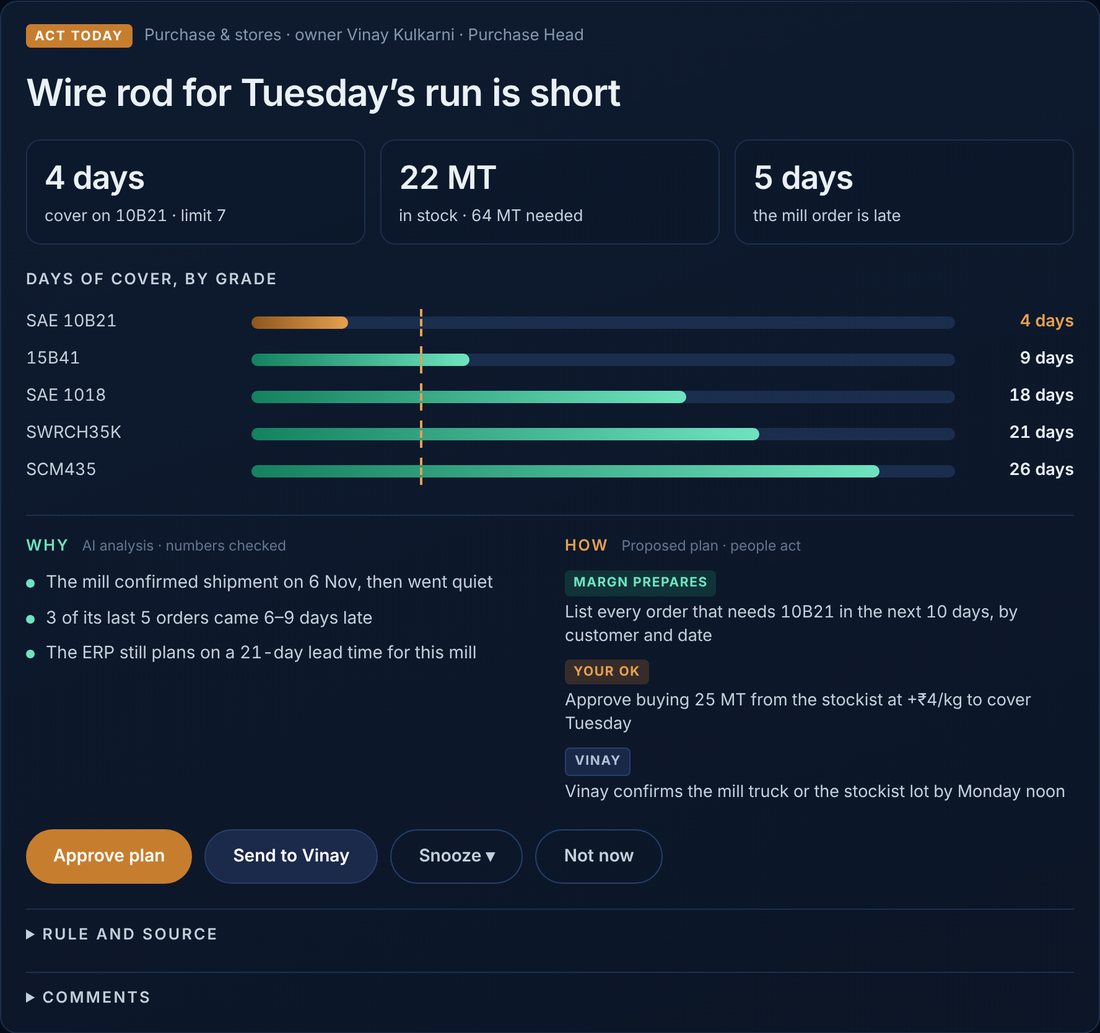
Filled in with the person who does the work.
The steps
What starts it, each step as a verb, who does it and their hours a week, systems touched, how often, and what goes wrong.
Value and ease
Value is hours a week. Ease is how ready the data is and how rule-based the work is, less a point if it crosses three or more systems.
Each step
Agent, agent with approval, or stays with your team. Anything costly to get wrong keeps an approval.
Time handed back
Hours a week returned to each person, labelled PROJECTED until the agent is live and measured. Shown in hours, never money.

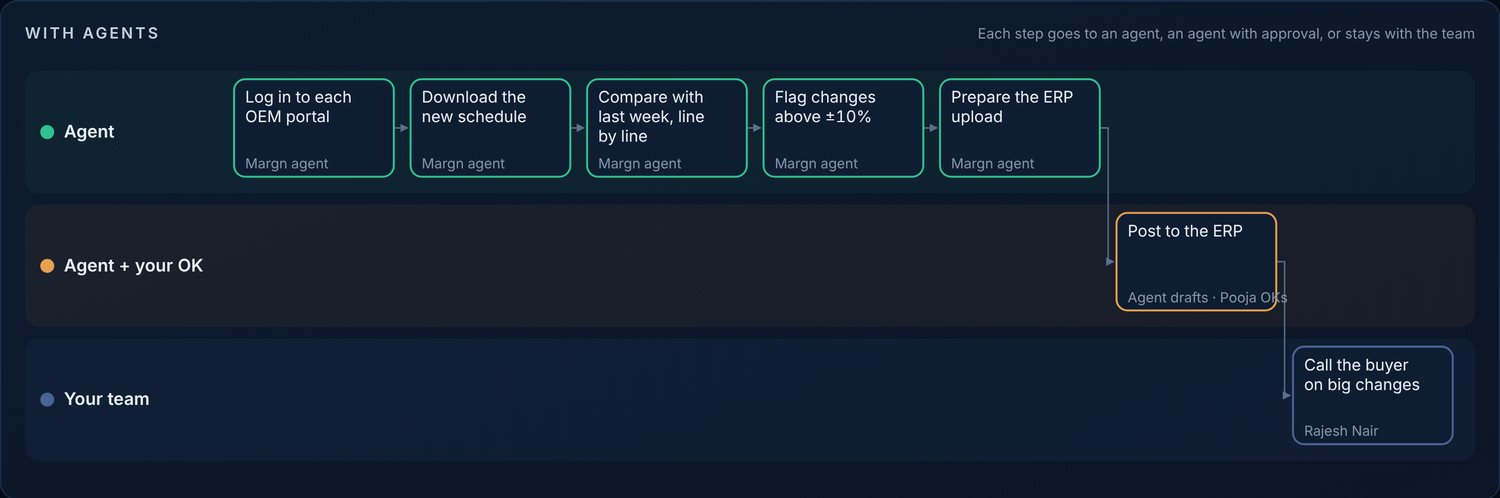
Value against ease decides the order.
Every mapped workflow lands on one chart. We build from the top right, take quick wins in between, and flag the workflows whose data needs fixing first.
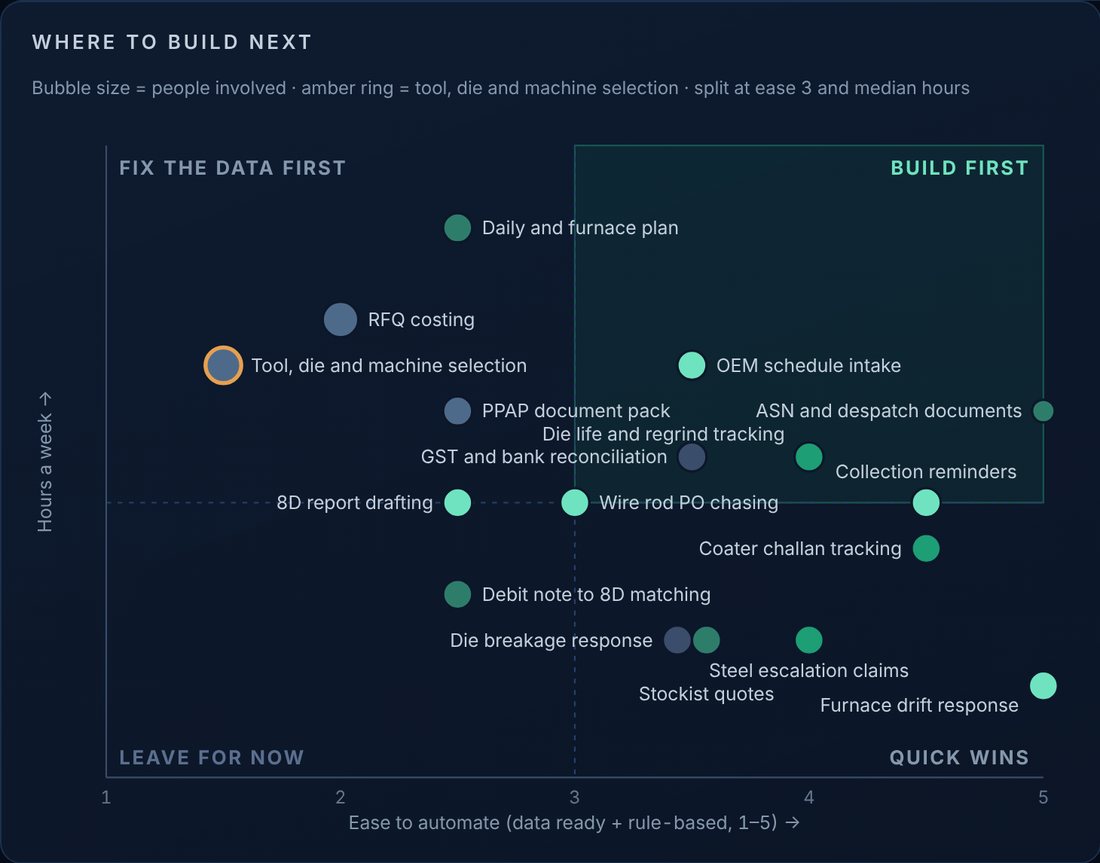
They prepare the work. A named person approves it.
- Agents read portals, compare schedules, chase suppliers, draft reports and post entries.
- Anything that commits money, stock or a customer waits for a person’s OK.
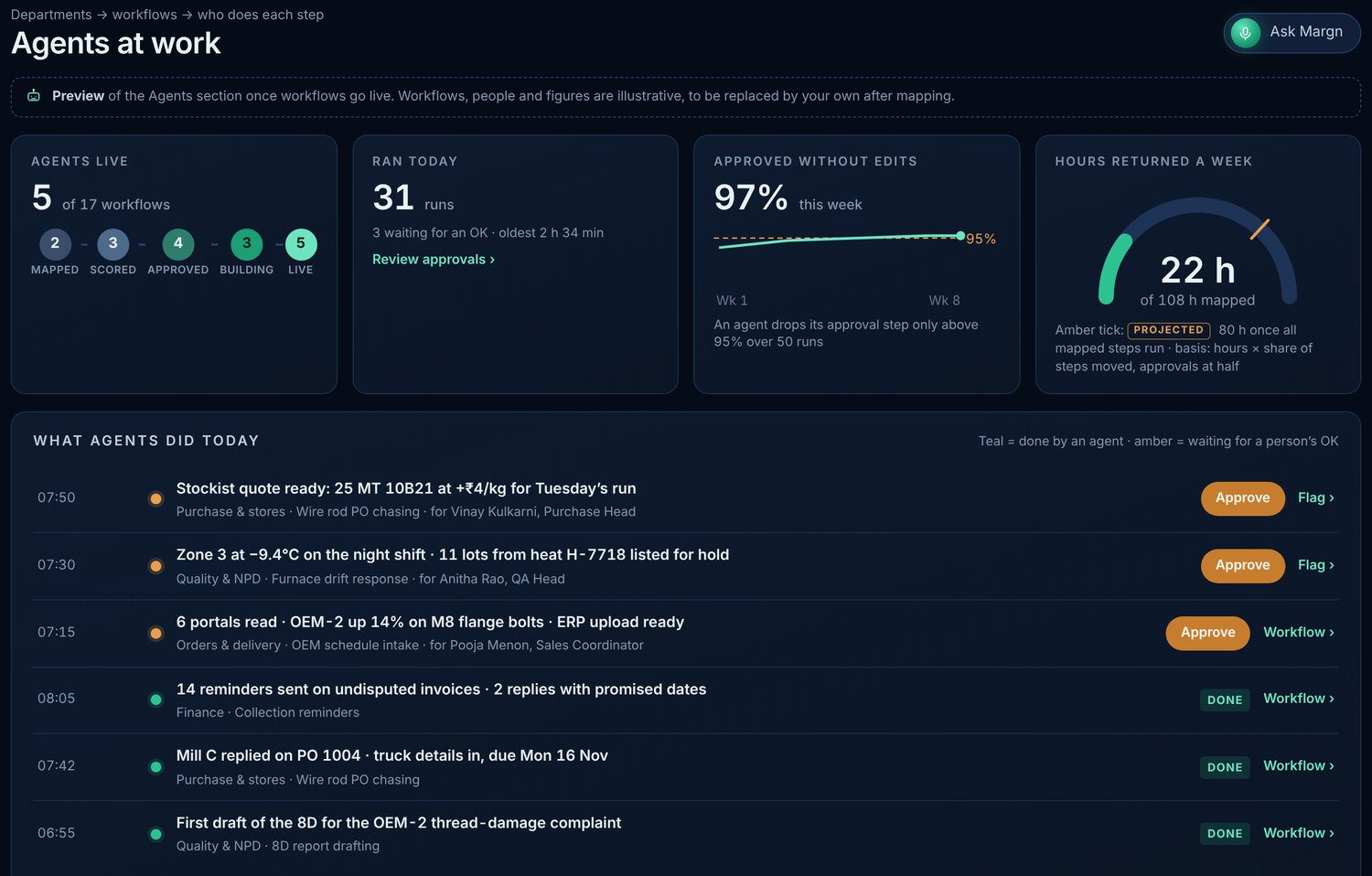
- Every run is logged, with what the agent did and who approved it.
An agent keeps its approval step until 95% of its work is approved without edits over 50 runs. The bar is set per workflow, and you can raise it.
The first agents we look at, by industry.
Every business is mapped from scratch. These are the workflows that usually come up first.
Orders, plant, quality, purchase
- Customer schedule intake from OEM portals
- Raw material PO chasing
- 8D report drafting
- Tool, die and machine selection
Sales, service, used cars
- Lead follow-up
- Service reminders
- Valuation chasing
- Stock clearance plans
Agents give your people their time back.
Agents take the copying between systems, the chasing and the checking. Your team keeps the judgement calls, the customer conversations and the final say. We report the hours handed back to each person.
Agents run inside the same boundary as the War Room. Your data stays under your control. Read how.
Find your first agent.
A 30-minute walkthrough, with your industry in mind.